
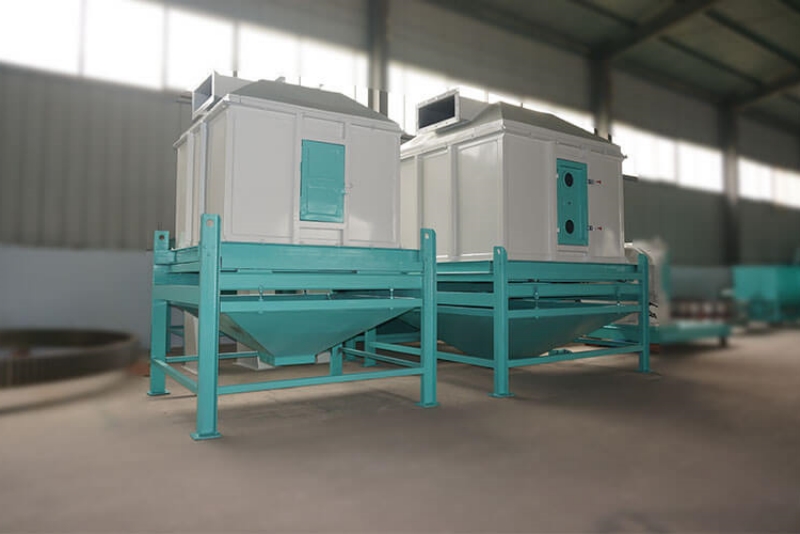
Vertical Pellet Cooler vs. Horizontal Pellet Cooler: Which One Is Better for Your Plant?
Choosing the right pellet cooling machine is crucial for maintaining pellet quality, improving efficiency, and reducing production costs. Two common types of pellet coolers used in the agricultural and feed industries are vertical pellet coolers and horizontal pellet coolers.
This guide will help you understand:
✅ Why pellet cooling is important
✅ The differences between vertical and horizontal pellet coolers
✅ Their advantages and disadvantages
✅ How to choose the best pellet cooling system for your business
Section 1: Why Is Pellet Cooling Important?
After pellets are formed in a pellet mill, they retain a high temperature (70–90°C) and moisture content. If not cooled properly, they can become fragile, moldy, or deformed, leading to low-quality output.
1. Benefits of Proper Pellet Cooling
- Enhances Pellet Durability:Prevents breakage and improves structural integrity.
- Reduces Moisture Content:Prevents mold growth and extends pellet shelf life.
- Improves Handling & Storage:Cooled pellets are easier to package and transport.
- Increases Energy Efficiency:Proper cooling reduces energy waste in the pellet production process.
2. How Pellet Coolers Work
A pellet cooling system removes heat from freshly processed pellets by using airflow to extract excess heat and moisture. This ensures that pellets maintain their shape, strength, and nutritional value.
Section 2: Understanding Vertical Pellet Cooler
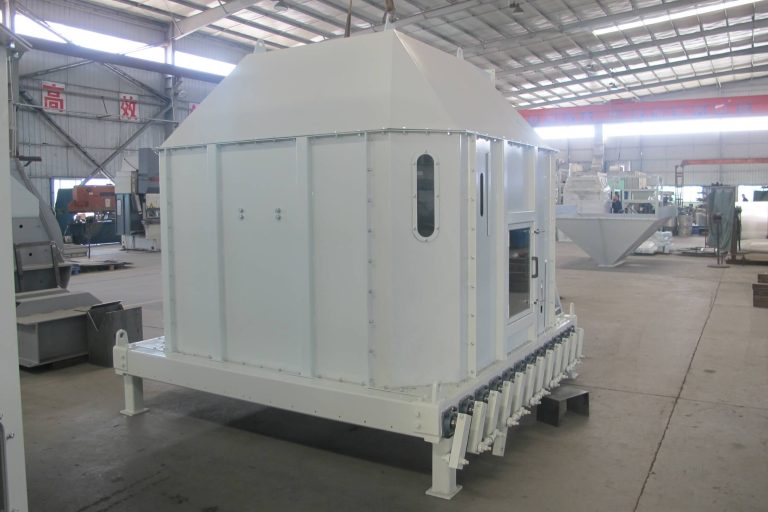
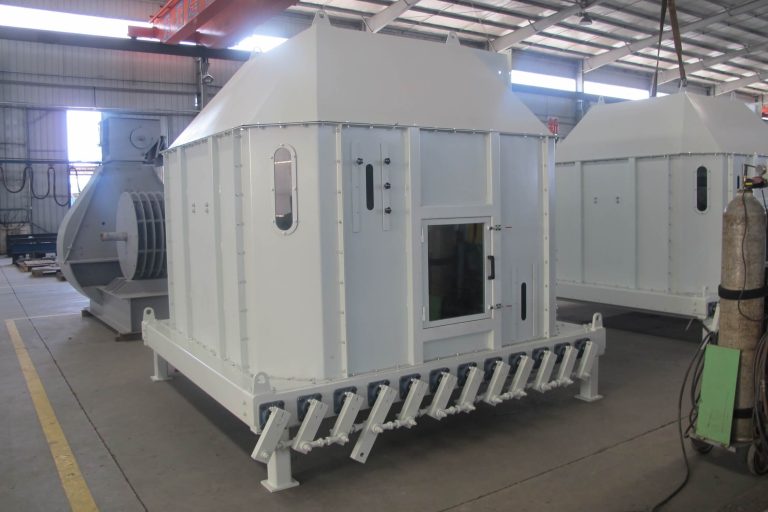
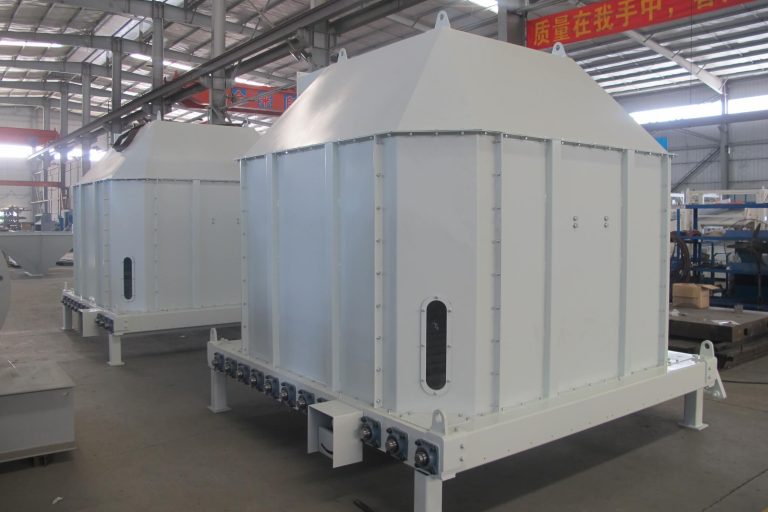
A vertical pellet cooler is a counterflow pellet cooler that uses opposite airflow to cool pellets efficiently. This design is ideal for feed pellet cooler applications where space-saving and energy efficiency are priorities.
1. How a Vertical Pellet Cooler Works
- Pellets enter from the topand move downward under gravity.
- Cold air enters from the bottomand flows upward, cooling the pellets evenly and efficiently.
- The cooled pellets exit from the discharge outlet, ready for storage or packaging.
2. Key Features of a Vertical Pellet Cooler
✔ Compact, space-saving design
✔ Energy-efficient counterflow cooling
✔ Minimal pellet breakage
✔ Suitable for small to medium production capacities
3. Common Applications
- Feed pellet cooling(poultry, livestock, fish feed)
- Pellet mill coolersystems in small to medium-sized plants
- Industrial pellet coolingfor animal feed production
Section 3: Understanding Horizontal Pellet Cooler
A horizontal pellet cooler is designed to cool pellets by spreading them across a moving perforated bed, where air circulates to reduce heat and moisture content. It is commonly used in large-scale pellet production facilities.
1. How a Horizontal Pellet Cooler Works
- Hot pellets are evenly distributedon a perforated conveyor belt.
- Cooling air is blown through the pellets, extracting heat and moisture.
- The pellets are gently transported along the conveyor, allowing uniform cooling.
- Cooled pellets exit at the discharge end, ready for further processing.
2. Key Features of a Horizontal Pellet Cooler
✔ Larger capacity for high-volume production
✔ Uniform cooling across the entire pellet batch
✔ Reduces pellet damage, ideal for fragile pellets
✔ Requires more floor space
3. Common Applications
- Biomass and wood pellet cooling
- Feed pellet cooling for large-scale farms
- Industrial pellet cooling systems for high-output factories
Section 4: Key Differences Between Vertical and Horizontal Pellet Coolers
Understanding the main differences between vertical and horizontal pellet coolers will help you decide which one is best suited for your plant.
Feature | Vertical Pellet Cooler | Horizontal Pellet Cooler |
Cooling Method | Counterflow cooling | Airflow over conveyor |
Cooling Efficiency | Fast, energy-efficient | Slower, more uniform |
Space Requirement | Compact, minimal space | Requires more floor area |
Pellet Type | Ideal for hard feed pellets | Better for fragile pellets |
Production Capacity | Small to medium-scale plants | Large-scale, high-output facilities |
Pellet Breakage | Minimal due to controlled airflow | Lower breakage due to gentle handling |
Maintenance Requirements | Lower maintenance needs | Requires regular cleaning and monitoring |
Cost Efficiency | Lower initial investment | Higher initial cost but better for mass production |
Section 5: Pros and Cons of Vertical Pellet Cooler
A vertical pellet cooler offers multiple benefits but may not be suitable for every production setup.
✅ Pros of Vertical Pellet Cooler
- Compact & Space-Saving– Perfect for plants with limited floor space.
- High Energy Efficiency– Uses counterflow cooling to reduce heat loss.
- Lower Initial Investment– More affordable than horizontal coolers.
- Minimal Pellet Breakage– Maintains pellet durability.
- Easy Maintenance– Fewer moving parts mean lower maintenance costs.
❌ Cons of Vertical Pellet Cooler
- Limited Capacity– Best suited for small to medium production, not large-scale factories.
- Less Suitable for Fragile Pellets– Pellets that are easily damaged (e.g., biomass pellets) may require a gentler cooling process.
- Requires Precise Airflow Control– If airflow is not optimized, cooling efficiency may be reduced.
Section 6: Pros and Cons of Horizontal Pellet Cooler
✅ Pros of Horizontal Pellet Cooler
- Ideal for large-scale production and continuous cooling.
- Low pellet breakage, preserving pellet quality.
- More uniform cooling, enhancing pellet durability.
❌ Cons of Horizontal Pellet Cooler
- Larger footprint, requiring more floor space.
- Slightly higher energy consumption compared to vertical coolers.
Section 7: Which Machine Is Better for Your Plant, Vertical or Horizontal Pellet Cooler?
Selecting the right pellet cooling machine is crucial for achieving optimal production efficiency and high-quality pellets. The choice between a vertical pellet cooler and a horizontal pellet cooler depends on various factors, including production scale, space availability, energy efficiency, and pellet type. Here’s a detailed comparison to help you decide:
1. Production Volume and Capacity Needs
- If your plant operates on a small to medium scale, a vertical pellet cooleris often sufficient. It efficiently cools feed pellets while occupying minimal space.
- If you have a high-volume production plant, a horizontal pellet cooleris the better choice as it can handle larger batches continuously without compromising cooling efficiency.
2. Available Space and Layout Considerations
- Vertical pellet coolershave a compact and upright design, making them ideal for factories with limited floor space.
- Horizontal pellet coolersrequire more floor space, so they are more suitable for large-scale facilities with enough room for installation and operation.
3. Pellet Type and Durability Concerns
- Feed pellets and agricultural pelletsare best suited for vertical pellet coolers since they are less prone to breakage.
- Biomass, wood, or fragile pelletsbenefit from horizontal coolers as they provide gentler handling and reduce pellet breakage.
4. Cooling Efficiency and Temperature Control
- Counterflow pellet coolers(like vertical coolers) remove heat effectively by allowing air to flow in the opposite direction of the pellets, ensuring fast and energy-efficient cooling.
- Horizontal pellet coolersspread pellets over a large surface area, leading to more uniform cooling but requiring a longer cooling time.
5. Energy Consumption and Cost Efficiency
- Vertical pellet coolersare generally more energy-efficient because of their direct counterflow cooling process, which minimizes heat loss.
- Horizontal pellet coolersmay consume slightly more energy due to their larger operational surface and longer cooling time.
Final Recommendation:
If space is limited, energy efficiency is a priority, and you need a cost-effective cooling solution, a vertical pellet cooler is the best choice.
However, if you require high-volume production, deal with fragile pellets, and have enough space, a horizontal pellet cooler is the better option.
Section 8: What to Consider Before Choosing a Pellet Cooler for Your Plant
Before investing in a pellet cooling system, it’s essential to assess your business needs, budget, and operational requirements. Here are key factors to consider when selecting the right pellet cooler machine for your plant:
1. Production Capacity and Business Scale
- Small to medium-scale businesses: A vertical pellet cooleris ideal as it provides efficient cooling in a compact structure.
- Large-scale and high-output plants: A horizontal pellet cooleris recommended as it allows for continuous cooling at higher volumes.
2. Cooling Efficiency and Pellet Quality
- If your goal is to maximize cooling efficiency while minimizing breakage, choose a machine that aligns with your pellet production process.
- For delicate pellets (e.g., biomass pellets), a horizontal pellet coolerprovides gentler handling.
- For hard feed pellets, a vertical pellet cooleris sufficient.
3. Space Availability in Your Facility
- Limited space?Choose a vertical pellet cooler, which requires less floor space and can be easily integrated into existing production lines.
- Have enough space?A horizontal pellet cooler offers superior cooling uniformity at the cost of more floor area requirements.
4. Budget and Cost Considerations
- Initial Investment:
- Vertical pellet coolerstend to be more affordable, making them a good choice for startups and small businesses.
- Horizontal pellet coolersare more expensive upfront but can be cost-effective in high-volume production scenarios.
- Operating Costs:
- Vertical pellet coolershave lower energy consumption, reducing long-term operational expenses.
- Horizontal pellet coolersmay require more energy and maintenance but offer better cooling performance for high-capacity production.
5. Compatibility with Your Existing System
- Make sure the pellet cooler machineyou choose integrates smoothly with your pellet mill, conveyor systems, and storage units.
- A well-matched system reduces downtime, improves efficiency, and enhances pellet handling systems.
6. Compliance with Industry Standards
- Choosea pellet cooling system that meets safety and quality standards to ensure regulatory compliance in the agricultural industry.
Section 9: Common Mistakes to Avoid When Choosing a Pellet Cooler
Choosing the wrong pellet cooler machine can lead to inefficient cooling, increased production costs, and poor pellet quality. Avoid these common mistakes when selecting a pellet cooler for your plant:
1. Ignoring Your Production Needs
- Many businesses overestimate or underestimate their cooling capacity requirements.
- Always analyze your current and future production volumesto choose the right machine.
2. Overlooking Space Constraints
- Some companies purchase large horizontal coolerswithout considering installation space.
- Ensure that your facility can accommodate the chosen cooler without disrupting workflow.
3. Choosing the Wrong Cooler for Your Pellet Type
- If you process biomass pellets or fragile feed, selecting a vertical coolercould result in high pellet breakage.
- Similarly, using a horizontal coolerfor hard pellets may lead to inefficient cooling and unnecessary costs.
4. Focusing Only on the Initial Price
- While cheaper coolersmay seem attractive, they often lack efficiency, durability, and advanced cooling technology.
- Consider long-term energy savings, maintenance costs, and productivitywhen making a decision.
5. Ignoring Energy Efficiency
- High-energy-consuming coolers increase operational expensesover time.
- Opt for a pellet cooling systemwith low power consumption and high efficiency.
6. Not Checking After-Sales Support and Warranty
- Ensure that the supplier provides technical support, spare parts availability, and a good warranty policy.
- Reliable supplierslike offer strong after-sales service, ensuring smooth operation.
Section 10: Recommended Supplier of Vertical Pellet Cooler
Selecting between a vertical pellet cooler and a horizontal pellet cooler depends on your plant’s needs, available space, and production goals. Vertical coolers offer compact design and energy efficiency, while horizontal coolers provide uniform cooling for high-volume production.
If you’re looking for a high-quality vertical pellet cooler for sale, Scikoon Industry Co., Ltd. is your trusted partner. With over 20 years of expertise, Scikoon specializes in manufacturing industrial pellet coolers designed for efficiency, durability, and superior pellet temperature control. Their products are engineered to maximize cooling performance while minimizing energy consumption, making them ideal for modern agricultural and industrial applications.
Scikoon Industry Co., Ltd.
Web: www.scikoonindustry.com
Email: info@scikoon.com
